
Sunday, February 23, 2020

Soylent Green could be Worse

"Soylent green is made out of people!" ... but it could be worse?


RadPotato sad sigh potato unhappy Sticker
Soylent comes in many different colors, but the color green is what the people are made out of. The color green symbolize greed, wealth, sickness, jealousy, all qualities of people on both sides of the fence in the Soylent Universe. The food is a direct reflection of the people, because it is the people. You are what you eat. 


I know it is supposed to be shocking that it's people, but the people are dead and THEN they are baked into green Cheese-its. Yes it's messed up, but I feel like it could have been taken even further if they were baked alive (might be too much for the 70s production codes...)

Let's look at the 70s:
During the time this movie came out, This movie was made in the early 70s and people grew up during the Vietnam war and it was still going on for 2 years after the movie came out in theaters.  Low income, low educated citizens were being targeted for the draft in 69s early 70s and Soylent green is a direct reflection of that reality, seen on both sides of the fence in the movie. The rich are protected and the poor are subject to the real circumstances of the world.


I feel the story has 2 different takes.

animation domination fox GIF by gifnews
Take 1: The Basic Idea
Forester talks about food in Sci Fi movies providing memories, personal histories, regrets and most obviously about how tech has been taken to the extreme and shows the audience how far society has gone wrong. In Soylent Green, yes, the earth has gone to shit. It is over populated and a majority live in poverty while the rich are uber rich.


Take 2: The Millennial Idea
Animated GIF
HIPPIE MOVIE!
It's all about veganism and sustainability.

People are mammals, animals are mammals. Soylent Green is a warning about how we should have focused on sustainable living options like growing personal crops and figuring out alternate ways of living rather modestly than exploiting animals and resources.
----BREAK OUT THOSE REUSABLE STRAWS-----

I'm leaning towards take 1 rather than take 2, but I think it's always interesting to see movies in two possible mind sets


Now----what would I do if I figured out what Soylent green was?]

hired money GIF by OriginalsI would like to think if I was rich I'd become a super vegan and figure out how to grow GMO food plants with science and employ the people living in poverty. Then I'd  slowly take zones of the world and integrate people back into normal society.... Because that's obviously how it works (I hope you sense the sarcasm!).

i want to die GIF
But if I was poor, In all honesty I would nothing. The world is dead already. I need to stay alive and everyone's brain that is poor is in survival mode. If I do something without the power of money I would probably die like Thorn- is that a bad thing? No. I think I'd want to die at that point!


Again, I feel it could have been more brutal than taking already dead and eating them in the context of the apocalypse. But I guess it's horrifying enough as it is.


Sunday, February 16, 2020

Mostly Martha

The film begins with Martha describing how to make her famous pigeon dish. "Describing" isn't the right word- she is fantasizing about her food. This sets the tone perfectly for the movie as Martha seems to be living in a fantasy world where humans only need to work. No sleep, no nourishment, and no companionship. The world flips on her when Lina and Mario enter her life. These characters are what push along the story and start Martha's character arc.

In class we talked about stereotypes (female/male, German/Italian). Let's go over the basics: Mario is care free spirited, loving and warm, Martha is uptight, cold and a major workaholic/perfectionist. When looking at the cooking industry, NPR reports less than 7% of  restaurants in the US are led by women. In Germany it is reported that only nine out of the 300 Michelin-starred restaurants are ran by women.  If Martha was not a workaholic I don't know how she would hold her title at the restaurant. She still gets crap from complaining customers and almost all of them were men. Regardless, this overbearing perfectionist attitude is developed by the gender inequality that is commonly seen in real world kitchens. In the real world, women often need to be a perfectionist workaholic to get 1/2 of the notoriety other chefs in the industry get. I think the food industry-any industry has given her many of her bad character qualities such as being cold and uptight. Working twice as hard is common when you're a woman. Looking at one of our previous movies, 1000 Foot Journey, Hassan outshines Marguerite midway though the movie while Marguerite remains sous chef (and eventually business partner... but she never got to have the Paris experience/notoriety). Marguerite worked hard, did everything by the rules, but never moved up in the ranks. Hassan adds a few spices to his dish the second day and then BOOM he owns the restaurant.


Mario could be very competitive and try to outshine Martha, but his laid back Italian nature shapes him into a nonthreatening character. He makes a comment to Martha when she accuses him of trying to take her job. He says "I only go where I am wanted." Why is that? Italian? No, I think that add's to it, but I really don't think white, male Mario has to fight very hard to get a good job. Therefore he has the freedom to roam freely, come in late, and entertain the kids and still gets to leave the work day unscathed.

I think the cultures assigned Martha and Mario were a very good choice. If Martha was an easy breezy Italian, she probably would have been knocked up cooking pasta while her hardworking husband Mario would be raking up Michelin stars at the restaurant.


Also, here is my favorite scene. I think it shows Martha's character very well.


Here is my work cited:
https://www.npr.org/sections/thesalt/2018/08/31/639398136/women-chefs-still-walk-a-fine-line-in-the-kitchen
https://www.exberliner.com/features/women-in-the-kitchen/
https://datausa.io/profile/soc/chefs-head-cooks

Sunday, February 9, 2020

Babette's Feast

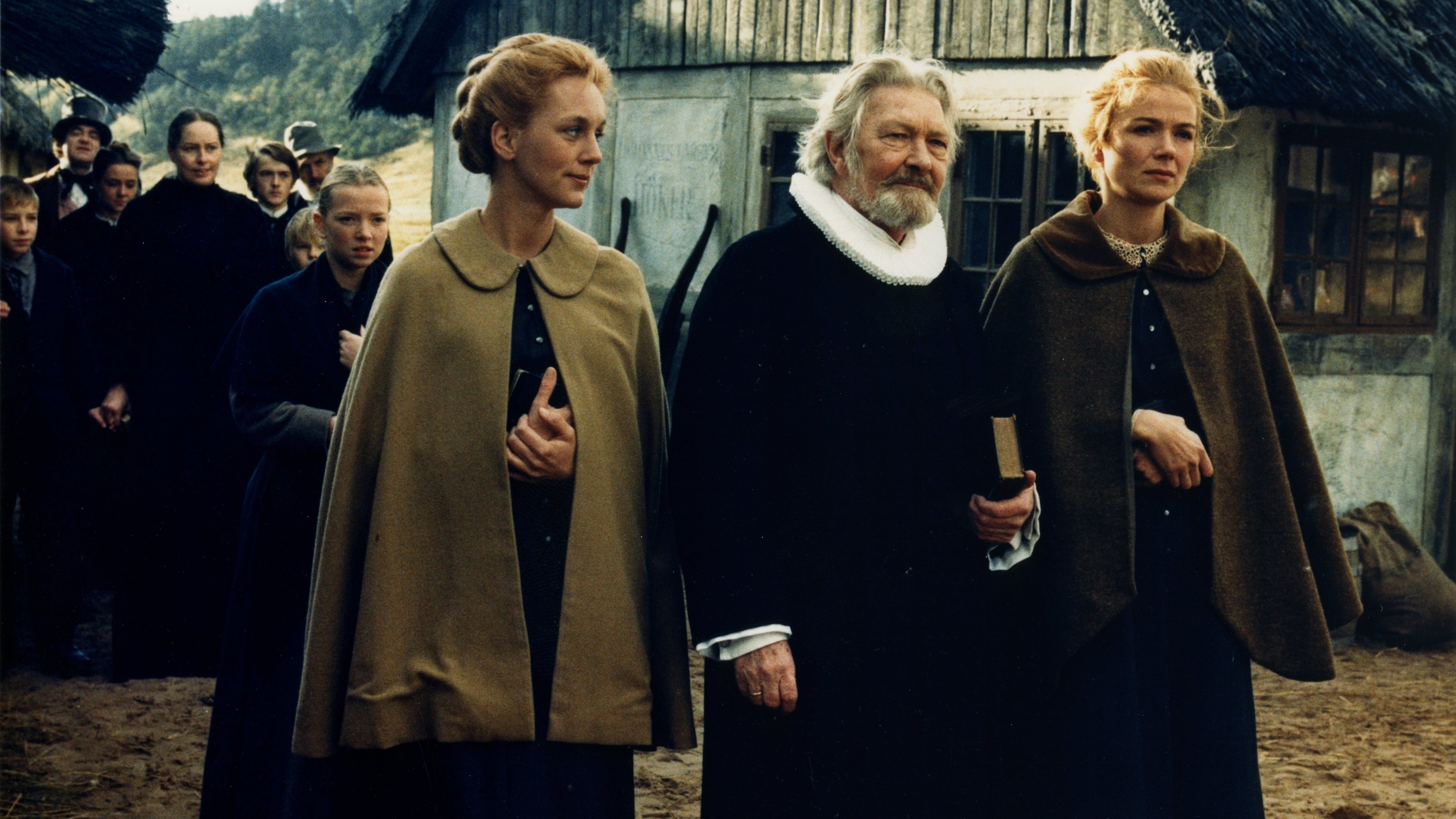
It was very interesting to see how religion and food interacted in this movie. I want to discuss one scene that I felt really showed the true characters of the sisters. During one of the first flashbacks, the camera shows the sisters singing in church. The narration explains that Martine and Philippa are devote protestants and refrain from going out at night or partaking in any other indulgences. The only place the girls appear are at church with their father. Even without the narration, the visual of the girls smiling and singing with all of the village boys staring at them at church was such a great depiction of where the girls get their pious attitudes. The sisters have had to "protect" themselves from sin (earthly love and other indulgences) almost in the entire movie. Men lust after them, like the village boys and the opera singer, but the girls only devotion is to God and their church community. The only time one of the sisters actually returns feelings of love is with the general, who is respectful and loves from afar, which seems like the only kind of love the sisters will accept. When the sisters have aged and are ready to eat Babette meal, this helps explains why they decide to refrain from talking about the food. The sisters are protecting themselves from earthly indulgences like they have rejected many times in the past. Usually their father will step in, like when one of the sisters was being "trapped" by the opera singer. The father stepped in handed the rejection letter to make the singer go away. Since the father is long deceased and the girls love Babette, the sisters agree to eat her meal, allowing an opportunity to further evolve the community

Babette's food transcends religion. Right before the food is served, the church community is fighting/bickering over petty arguments involving topics like lust and betrayal (the woman who cheated on her husband and the man who cheated a trick on his brother). Having a dinner is a religious experience. By eating together and sharing a meal, the community is reunited as the protestants have dropped their guards and by the end their bodies and souls are nourished. For example, the brothers who tricked each other were empty, feeling that they have lost trust between each other. By the end of the feast they admit they both have cheated each other and are able to laugh about it. The food has nourished the community in a way words could not, the sisters could not even bring peace to the community as they tried to unite in song before the meal and it ended in an outbreak. This shows the old protestant ways are becoming outdated and a new holy language needs to develop: food.

Another element of the feast scene that stuck out to me was how important discussing the food is. The whole entire time the general is trying to discuss the meal with everyone as he is blown away by the cooking. He even tries to add anecdotes from his time in France as he tastes the duck pastry. If another person at the table decided to pick up on this conversation, it would have been revealed much sooner that Babette was a famous chef. Eating sparks conversation and the tension at the dinner table was comedic because  avoidance of discussing the food is an unnatural because the dinner table carries its own culture. This shows how food is supposed to connect the people who enjoy the meal together. By taking away this element, it reveals how prominent discussion of food at the dinner culture really is.

Babette's Feast shows this transformation of the Protestant people and the power great food can have.

-Annie McDevitt

Image result for babettes feast churchImage result for babettes feast church

The Final Post

This class has given me a new perspective of food. Looking at all of my previous blogs, I see that I understand the ways food can be used...